
5 min readAI, Showcase
What we took to Parliament House, and what the room asked
Notes from the inaugural Australian AI Parliamentary Showcase: what we showed, the questions people actually asked, and the one nobody expected.
By Dave Tormey
Last week we exhibited at the inaugural Australian AI Parliamentary Showcase in the Great Hall at Parliament House. The organisers were clear, rightly, that exhibiting there does not mean endorsement by anyone, and it does not. What it did mean was two and a half hours in a room with the people writing and advising on Australia's AI rules, and a chance to hear what they actually want to know.
What we showed
Two screens and a banner. One screen ran a short film about teaching software a real job from a finished example. The other ran a silent loop called "AI, without the magic": the brushing-her-teeth explanation, the aviation argument, and the four questions any buyer should ask. No live demo unless someone asked for one. The point of the stand was not to sell anything. It was to show what governance looks like when it is in the software rather than in a policy document.
What people asked
The questions clustered in a way I did not expect.
Almost nobody asked how good the model was. Nearly everyone asked some version of "how do you know what it did?" Chain of custody, in other words. What did it access, what did it produce, who approved it, can you show me. That is the question regulators are starting to ask, and it was the question in the room.
"Is flying really the safest way to travel?" came up more than once, prompted by the screen. Yes, by distance travelled, and it is not close. Then the follow-up: "but planes still crash." They do. Seven times last year out of forty million flights, and every one of them gets a black box and a change to the checklist. That is the whole argument.
"What happens when it doesn't know?" It says so. In our first real test, an experienced estimator checked every one of the system's answers on a live bridge project. Thirteen out of thirteen were either found in the drawings and cited, or handed back to him as a question. Nothing invented. "Not found" is a legitimate output. Guessing is not.
"Isn't this going to take people's jobs?" It takes the part of the job people complain about, hunting through hundreds of pages, and gives the judgement back to them.
The one I had prepared for and still found hard
"Aren't these models hopelessly energy-hungry? Doesn't this whole thing depend on an electricity breakthrough that hasn't happened?"
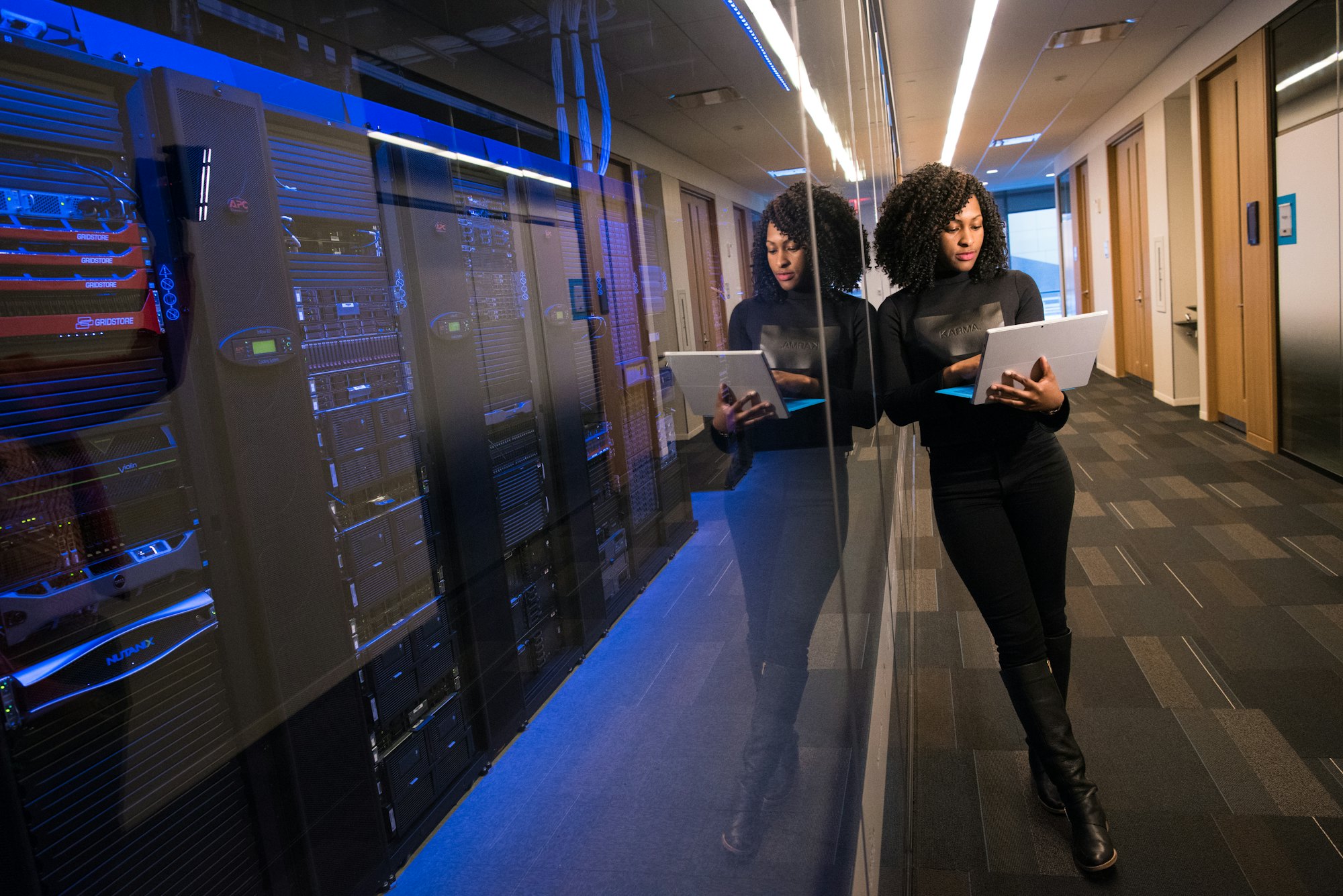
It is a fair challenge. Training and running frontier models is genuinely energy-intensive and the load growth is a real grid-planning problem. Two things give me some optimism. Efficiency per unit of work keeps falling: smaller, cheaper, better-routed models keep doing more with less. And the industry does not actually need a breakthrough in supply; it needs new data centres to bring their own power rather than draw off everyone else's grid, which is already how the largest operators are starting to contract. Make that the rule for new capacity and the problem stops being a shared one.
There is a governance angle too. If known jobs run as fixed, predictable workflows and the model is only invoked where judgement is needed, you use less compute because you need less. That is a side effect of governing the work properly, not a separate initiative.
What I took away
The people shaping the rules are not asking whether AI is impressive. They know it is. They are asking whether anyone can prove what it did. That is a question software can answer, and it is the question worth building for.
Thanks to Precision Public Affairs for putting the morning together at short notice, and to my wife for holding the stand with me.